Discover listening skills for married Catholics that go beyond advice-giving — rooted in Theology of the Body and built for the hardest conversations.
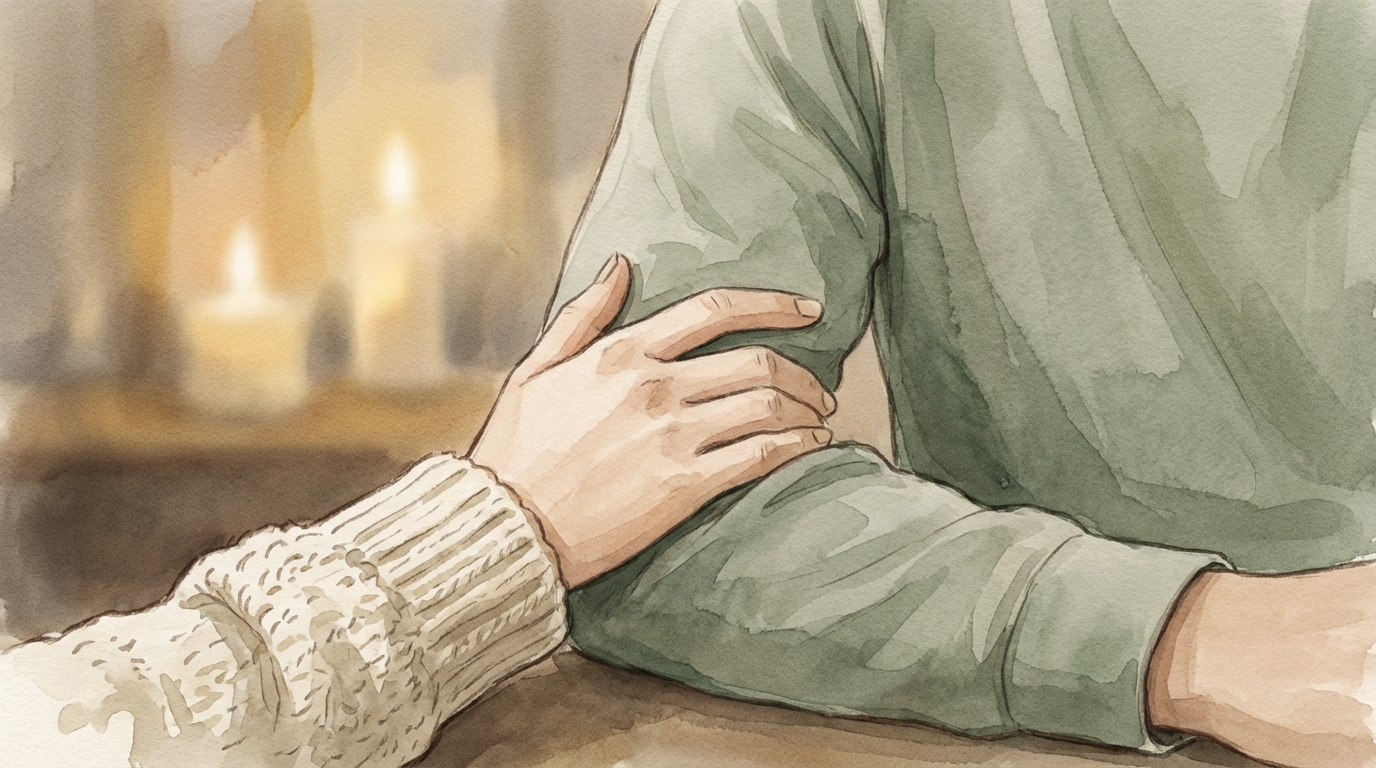
To truly hear your spouse is to receive them as the person they actually are, not the person you expected to meet.
Most of us walked into marriage genuinely wanting to be a good listener. We pictured patient conversations over coffee, the unhurried kind where both people felt truly known. Then life arrived — exhaustion, schedules, fertility grief, the particular friction of two people who love each other and still manage to talk past each other on a Tuesday night — and we discovered that listening well is one of the hardest things marriage asks of us.
That gap between intention and practice isn’t a character flaw. It’s a real, human limitation that deserves honesty, not shame. But it does deserve attention. Because how we listen to our spouses shapes — quietly and over years — whether they feel known or merely managed inside the covenant they gave themselves to.
Why Listening in Marriage Is Harder Than It Sounds
There’s a particular cruelty in the fact that we tend to listen worst to the people who matter most. With colleagues, we stay alert and composed. With our spouse, after a full day of self-regulation, we’re operating on fumes. We half-listen while loading the dishwasher. We interrupt to problem-solve before they’ve finished the sentence. We brace against certain tones of voice before we’ve actually heard what’s coming.
None of this is malicious. But it accumulates. Research consistently suggests that couples who report feeling unheard are significantly more likely to experience chronic conflict and emotional distance — not necessarily because they fight more, but because they feel alone inside a relationship that was supposed to end loneliness.
The struggle is worth naming honestly, because the path forward begins not with better techniques but with a clearer picture of what listening in marriage is actually for.
Receiving the Other: What Theology of the Body Adds to the Conversation
John Paul II built his Theology of the Body around a phrase borrowed from Gaudium et Spes 24: that the human person “can fully discover his true self only in a sincere gift of self.” In the spousal relationship, he developed this into something profound and demanding — that husband and wife are called to make a total gift of themselves to each other, and to receive the gift the other makes in return.
We tend to think of that receiving as something that happens in the body, in the conjugal embrace. And it does. But it also takes flesh in the far more ordinary moment when your spouse sits down across from you and starts talking about something that matters to them.
Their words are an offering. The question is whether you receive that offering — whether you turn toward it with the full attention of a person who has promised to cherish this particular human being — or whether you deflect it: half-answering, problem-solving prematurely, letting your own agenda run the room.
Spousal communion, in JPII’s vision, isn’t only built in the exceptional moments. It is made and unmade in the daily texture of how two people actually inhabit a conversation together. Listening, understood this way, isn’t a communication skill. It is how the gift of self takes shape on an ordinary Wednesday evening.
The Difference Between Hearing and Listening
Hearing is passive. Sound reaches your ears, your brain registers words, you could technically pass a pop quiz on the content. We hear things all day long without ever being moved by them.
Listening is something different. It requires the orientation of the whole person — not just your ears but your attention, your eye contact, the posture of your body and, more importantly, the posture of your heart. To listen is to temporarily set down your own interior monologue and make room for someone else’s experience to land.
This is where most well-intentioned spouses go sideways: we shift from listening into advising, and we do it fast. Someone shares a hard thing, and within moments we’re generating solutions. It feels like help. It often isn’t. What most people need first — and spouses especially — is simply to feel received. Understood before they are answered. Known before they are fixed.
Presence, not solutions, is usually what a spouse is asking for, even when their words sound like a request for advice.
Four Habits That Shift the Dynamic
These aren’t therapeutic protocols. They’re small, doable adjustments that can meaningfully change the temperature of your conversations.
Ask before you advise
When your spouse brings you a problem, try one question before you offer anything: “Do you want me to just listen right now, or are you looking for ideas?” It sounds simple. It communicates enormous respect. It tells your spouse that you understand the difference between needing a sounding board and needing a strategist — and that you’re willing to be whichever one they actually need.
Reflect the emotion, not just the content
There’s a difference between “So you’re saying your boss moved the deadline” and “That sounds genuinely exhausting — like you’re working hard and the goalposts keep moving.” The first response proves you were paying attention to the facts. The second proves you were paying attention to them. Naming what you sense someone is feeling — tentatively, without projecting — signals that you are tracking more than information.
Tolerate silence
We fill silence out of anxiety, not care. The next time your spouse finishes saying something hard, try waiting — three seconds, five seconds — before you respond. Let the weight of what they said actually settle. You’ll often find they have more to say, or that your response, when it comes, is much better for the pause.
Name your own limits and propose a return
Sometimes you genuinely cannot listen well right now. You’re depleted, dysregulated, or too close to the subject to be helpful. The worst option is pretending otherwise and giving your spouse a distracted, resentful version of your attention. The better option: “I want to hear this properly. I’m not in the right headspace at this exact moment — can we sit down after dinner?” The key is specificity. Vague deferrals feel like rejection. A named time feels like a promise.
When the Conversation Is the Hard Kind
Some conversations carry more weight than others. The ones about pregnancy loss, about felt inequities in the home, about loneliness inside the marriage itself — these are the moments when our listening either deepens the bond between us or quietly fractures something that’s hard to repair.
In these conversations, every instinct may conspire against you. The urge to minimize (“It could be worse”), to fix (“Here’s what we should do”), or to withdraw (“I don’t know what you want from me”) — all of it is understandable. All of it can make a grieving or struggling spouse feel profoundly alone. The broader work of resolving conflict in a Catholic marriage speaks directly to how couples find each other again after these harder exchanges.
What they often need is simpler and harder than any of those responses: for you to stay. To not rush the discomfort toward resolution. To say, “I’m here. Tell me more.” The willingness to sit with your spouse in a hard place — without solving, without escaping — is one of the more concrete ways that spousal love mirrors something deeper than sentiment. It resembles the kind of presence that doesn’t abandon.
One Small Practice to Try Tonight
Before bed, or after dinner, try a ten-minute check-in: phones in another room, no agenda, one open question. Something like “What’s been sitting heaviest with you today?” or “Is there anything you’ve wanted to tell me that we haven’t had space for?” For couples who want to make this kind of sharing a consistent weekly ritual, the weekly marriage check-in routine offers a simple, structured format.
You don’t need to fix whatever comes up. You just need to be there for it. Over time, this kind of small, repeated attentiveness builds something that no single dramatic conversation can build — a marriage where both people genuinely believe they are not alone.
That’s worth ten minutes. Most nights, it turns out to be the best ten minutes you spend.