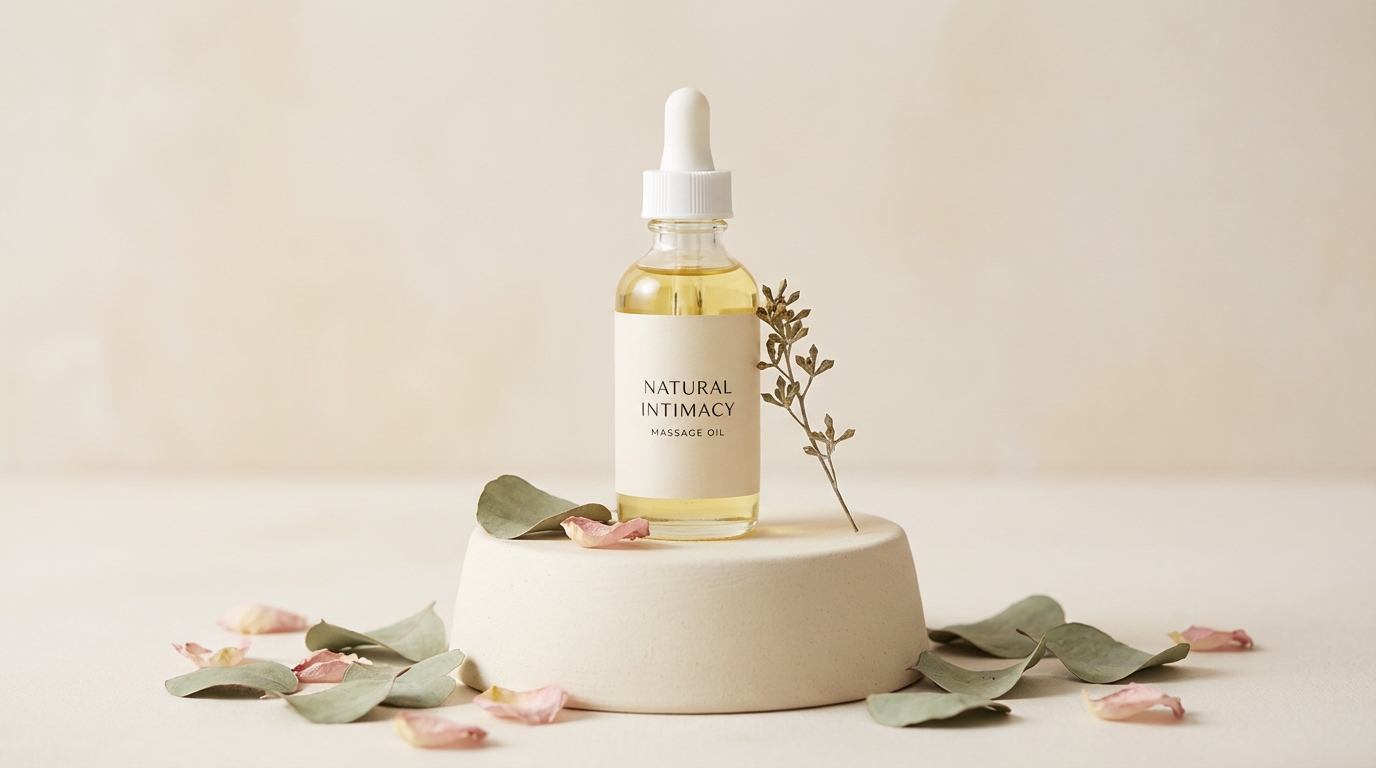
There is something quietly countercultural about slowing down with your spouse. Not a grand gesture, not a getaway — just oil, unhurried hands, and the kind of attention that says I am here, and you matter to me. If you’ve started thinking more carefully about what you bring into that space, you’re not being fussy. You’re being a good spouse.
John Paul II wrote extensively about the body as a sign — a visible expression of invisible gift. In the language of Theology of the Body, touch between spouses is never merely physical; it speaks of total self-donation, of belonging to each other freely and fully. Choosing products that honor the body your spouse has entrusted to you is, in that light, a small but genuine act of reverence.
Why Ingredients Actually Matter Here
The skin is not a wall — it’s more like a mesh. Research consistently suggests that what goes on the body can pass through it, and for products used in or near mucous membranes, that absorption is faster and more complete. Conventional massage oils frequently rely on synthetic fragrances, preservatives like parabens, and petroleum-derived fillers. These aren’t inert. Some are suspected endocrine disruptors, meaning they may interfere with the hormonal rhythms that govern fertility, mood, and desire — the very things you’re trying to protect and nurture.
Caring for your spouse’s body as a sacred trust means caring about what touches it. That’s not anxiety — it’s attention. And attention is love made visible.
What to Look For (and What to Avoid)
A clean intimacy massage oil doesn’t need a long ingredient list. In fact, shorter is usually better. Here’s a plain checklist to carry into any product search:
Carrier Oils to Say Yes To
- Fractionated coconut oil — lightweight, nearly odorless, absorbs without leaving a heavy residue
- Sweet almond oil — slightly richer, excellent skin feel, mildly nourishing
- Jojoba — technically a liquid wax, very shelf-stable, close to skin’s natural sebum
Things to Avoid
- “Fragrance” or “parfum” on the label — this single word can hide dozens of unlisted synthetic chemicals
- Parabens (methylparaben, propylparaben, etc.) — common preservatives with hormone-mimicking concerns
- Mineral oil or petrolatum — petroleum derivatives with no nutritive value and poor mucous-membrane safety profiles
- Glycerin from unknown sources — can disrupt vaginal pH; look for vegetable-derived glycerin if it appears
Other Markers Worth Checking
- Third-party testing or a published certificate of analysis
- Latex-condom compatibility, if relevant (oil-based products are not latex-compatible — confirm your situation before use)
- Unfragranced or naturally scented with pure essential oils, not “natural flavor” blends
Our Top Picks for Natural Intimacy Massage Oil
We reviewed several products against these criteria. These are the ones we’d actually recommend to a friend.
Foria Intimacy Massage Oil
Foria has built its reputation on formulating specifically for intimate use, and this oil earns that trust. The base is organic fractionated coconut oil infused with kava root extract — an ingredient with traditional use for gentle, warming relaxation of smooth muscle tissue. The scent is faint and botanical, not perfume-like. It absorbs cleanly and doesn’t leave sheets feeling coated. For couples navigating vaginismus, postpartum tension, or simply the accumulated tightness of a stressful season, this is a thoughtful starting point.
Scent: Subtle, earthy, faintly sweet. Texture: Lightweight, silky. Value: Mid-range; a little goes a long way.
Foria Natural Intimacy Massage OilCoconu Body Oil
Coconu makes two versions — water-based and oil-based. The oil-based formula uses organic coconut oil with a vanilla-and-orange essential oil blend that is genuinely pleasant without reading as a spa product. The ingredient list is short and clean, and the brand publishes its testing. Couples who want something warmer in scent profile tend to prefer this one. Not recommended with latex, but otherwise broadly compatible.
Scent: Warm vanilla-citrus. Texture: Slightly heavier than Foria. Value: Excellent.
Alaffia Everyday Shea Body Oil
For couples on a tighter budget, Alaffia’s shea body oils (unfragranced variety) perform well as a massage base. Not formulated specifically for intimate use, so exercise judgment on placement, but the ingredients are transparent and largely food-grade. The unscented version is genuinely unscented — a rare thing. Widely available.
Scent: None (unscented variety). Texture: Medium-weight. Value: Very accessible.
Making It a Ritual, Not Just a Routine
The oil matters less than what you do with it. Rituals are, at their root, about meaning — the same action, repeated with intention, becomes a form of language. That’s as true in marriage as in liturgy. When touch is unhurried, when one spouse gives their attention wholly to the other’s comfort and ease, something is communicated that words don’t always reach. This is especially true in seasons of grief, infertility, chronic illness, or the ordinary exhaustion that accumulates in a busy household. Our broader best massage oil for married couples guide covers five clean options for different needs and budgets, and our piece on how to improve intimacy in a Catholic marriage gives the relational context for making touch a regular practice.
You don’t need a special occasion. You need fifteen minutes, a willingness to be present, and the quiet conviction that your spouse’s body — and your own — is worth caring for well. That conviction, small and unspoken as it may feel in the moment, is its own kind of prayer.